Tree Removal or Crown Reduction in Leicestershire: How to Decide Before the Problem Gets Worse
If you are searching for tree removal or crown reduction Leicestershire, the real question is simple: can the tree be retained safely, or has it reached the point where removal is the wiser option? Leaving the decision too long can turn a manageable job into a bigger safety issue, especially when branches are overhanging buildings, blocking access or showing signs of decline.
At Blackwood Tree Services, we help domestic and commercial customers across Leicestershire and Nottinghamshire make that decision with clear, practical advice. From our base in Ragdale near Melton Mowbray, we carry out site-based assessments and recommend the most suitable work for the tree, the property and the long-term result you want.
This guide is designed for property owners who are not comparing pruning methods in general, but deciding between keeping a tree with crown work or removing it before the problem gets worse.
Tree removal or crown reduction Leicestershire: what is the right option?
Both services solve tree-related problems, but they do very different things.
What crown reduction is
Crown reduction reduces the height and spread of a tree's canopy while aiming to keep a balanced, natural framework. Done properly, it can make a tree more proportionate to its surroundings, reduce end weight on extended limbs and improve clearance from buildings, gardens and neighbouring spaces.
It is not the same as simply cutting branches back harshly. Professional crown reduction should be planned carefully, taking into account the species, the existing structure and how the tree is likely to respond.
What tree removal is
Tree removal is the dismantling or felling of the tree when retention is no longer the best option. This is usually recommended when the tree presents a significant risk, is in serious decline, or is creating a conflict that pruning alone will not solve.
Removal is a bigger intervention, but in the right situation it can be the safest, tidiest and most practical decision. We provide professional tree surgeon services in Leicestershire and Nottinghamshire to assess which route is appropriate before unnecessary work is carried out.
When crown reduction is often the better option
Many trees do not need to come down. If the tree is fundamentally healthy and structurally suitable for ongoing management, crown reduction can often deal with the issue while retaining the tree.
The tree is healthy but too large for the space
A mature tree may simply have outgrown its setting. If branches are reaching too far over a roof, driveway, lawn or boundary, crown reduction may restore better clearance without losing the tree altogether.
You want to reduce weight on extended limbs
Where long lateral branches are creating leverage or placing more load on certain areas of the crown, selective reduction can help lessen that pressure. This can be especially useful where the aim is to improve management rather than remove the tree entirely.
You want more light and better balance
In some gardens, the issue is not that the tree is unsafe, but that it feels dominant, shades the space excessively or sits awkwardly in relation to the house. A well-planned reduction can improve light and proportions while preserving the character of the garden.
The tree still has a good future with ongoing maintenance
Crown reduction is often the right option when the tree has enough healthy structure to justify retention and when periodic maintenance is a realistic long-term plan.
In these cases, the goal is not just to cut the tree back. It is to retain it in a way that is safer, more manageable and visually appropriate.
When tree removal is often the safer or more practical choice
There are times when reduction work would only postpone a bigger issue. If the underlying condition of the tree is poor, or if the location creates an ongoing risk, removal may be the more responsible recommendation.
The tree is dead, dying or in obvious decline
A tree that has extensive deadwood, significant dieback or poor vitality may not respond well to reduction work. In that situation, keeping it may offer little long-term benefit and may leave a hazard standing for longer.
There are serious structural defects
Major cavities, substantial decay, split stems, unstable unions or signs of root plate movement can all affect whether the tree can be retained safely. Crown reduction can reduce some loading, but it does not fix a fundamentally unstable tree.
The tree has already had repeated branch failures
If large limbs have failed more than once, or if previous damage has left the crown compromised, it may be time to consider removal rather than continued reactive work. This is especially important where the tree is close to buildings, vehicles or regular foot traffic.
The location is wrong for the tree
Sometimes the issue is not one defect but the overall relationship between the tree and the site. A tree may be too close to structures, too dominant for the available space, or likely to need repeated heavy pruning to keep it under control. In that case, removal can be the more practical long-term decision.
Storm damage has changed the risk level
Some storm-damaged trees can be retained with crown work. Others cannot. If the trunk, main scaffold limbs or root area have been compromised, removal may be necessary to make the site safe again.
What we assess before recommending crown reduction or removal
The right answer is rarely based on one detail alone. A professional recommendation should consider the whole picture, not just the fact that the tree feels too big.
At Blackwood Tree Services, we look at factors such as:
Species and growth habit so the work suits how the tree naturally develops
Overall health and vigour including visible signs of decline
Structure and defects in the crown, stem and root zone
Proximity to targets such as buildings, access routes, fences and parking areas
Whether crown reduction would leave a suitable canopy rather than over-pruning the tree
Future maintenance needs and whether repeat work is likely
Access for safe dismantling or pruning including waste removal and site conditions
Any relevant restrictions such as protected status or conservation area considerations
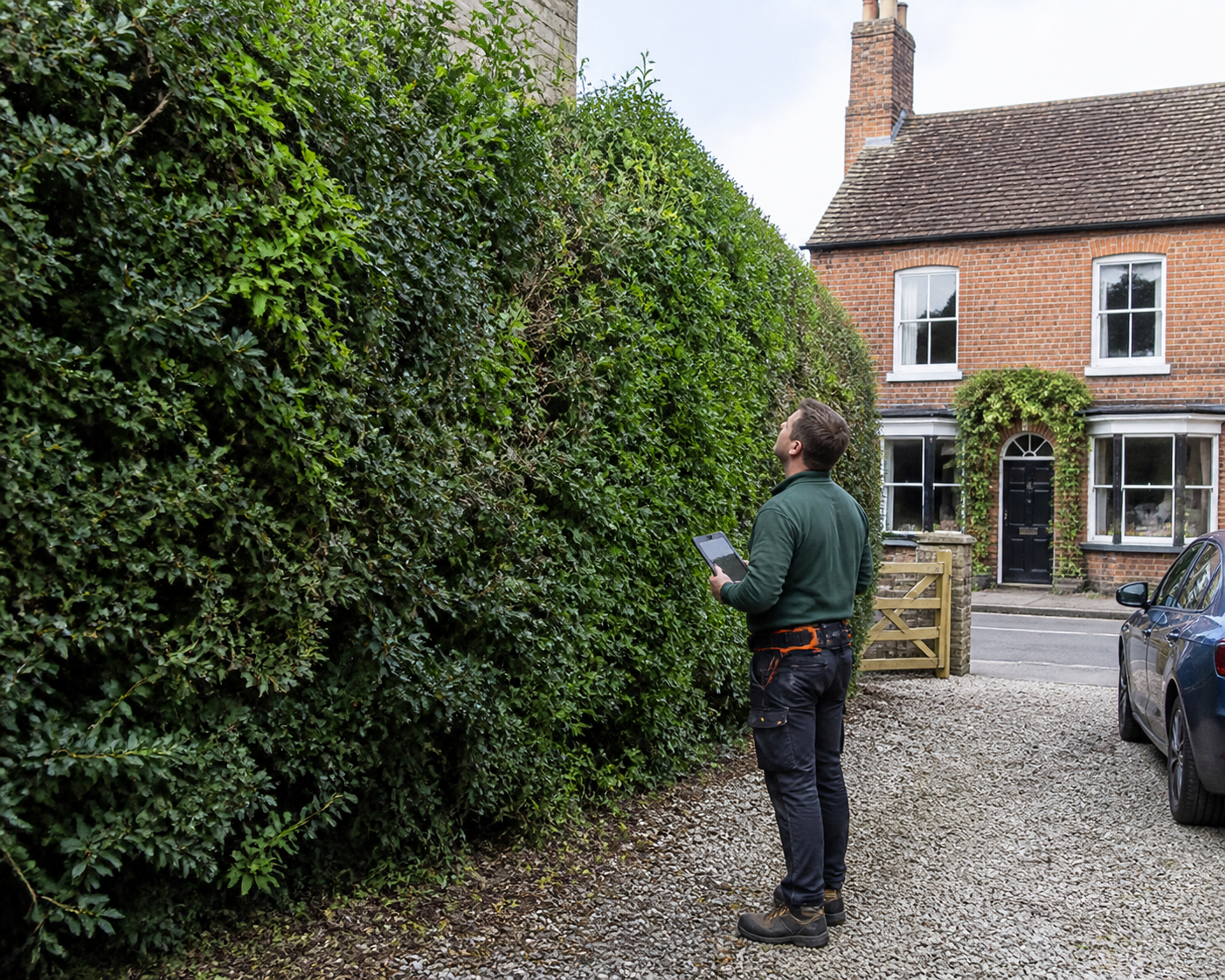
This is why a proper site visit matters. A tree that looks removable from the ground may be a good candidate for retention, and a tree that appears manageable may actually have defects that make removal the safer course.
Why delaying the decision can make the job worse
One of the most common problems we see is delay. A tree starts as a manageable concern, then gradually becomes a larger, more urgent issue.
Putting the decision off can lead to:
More branch growth over roofs, gardens or neighbouring property
Increased loading on already extended or weak limbs
Reduced access for carrying out the work cleanly and efficiently
A higher chance of sudden failure during bad weather
A move from planned maintenance to urgent safety work
Early assessment usually gives you more options. If crown reduction is appropriate, it can often be carried out before the tree becomes too dominant. If removal is the right answer, dealing with it sooner can prevent further disruption and help you plan the next steps properly.
What happens if tree removal is recommended?
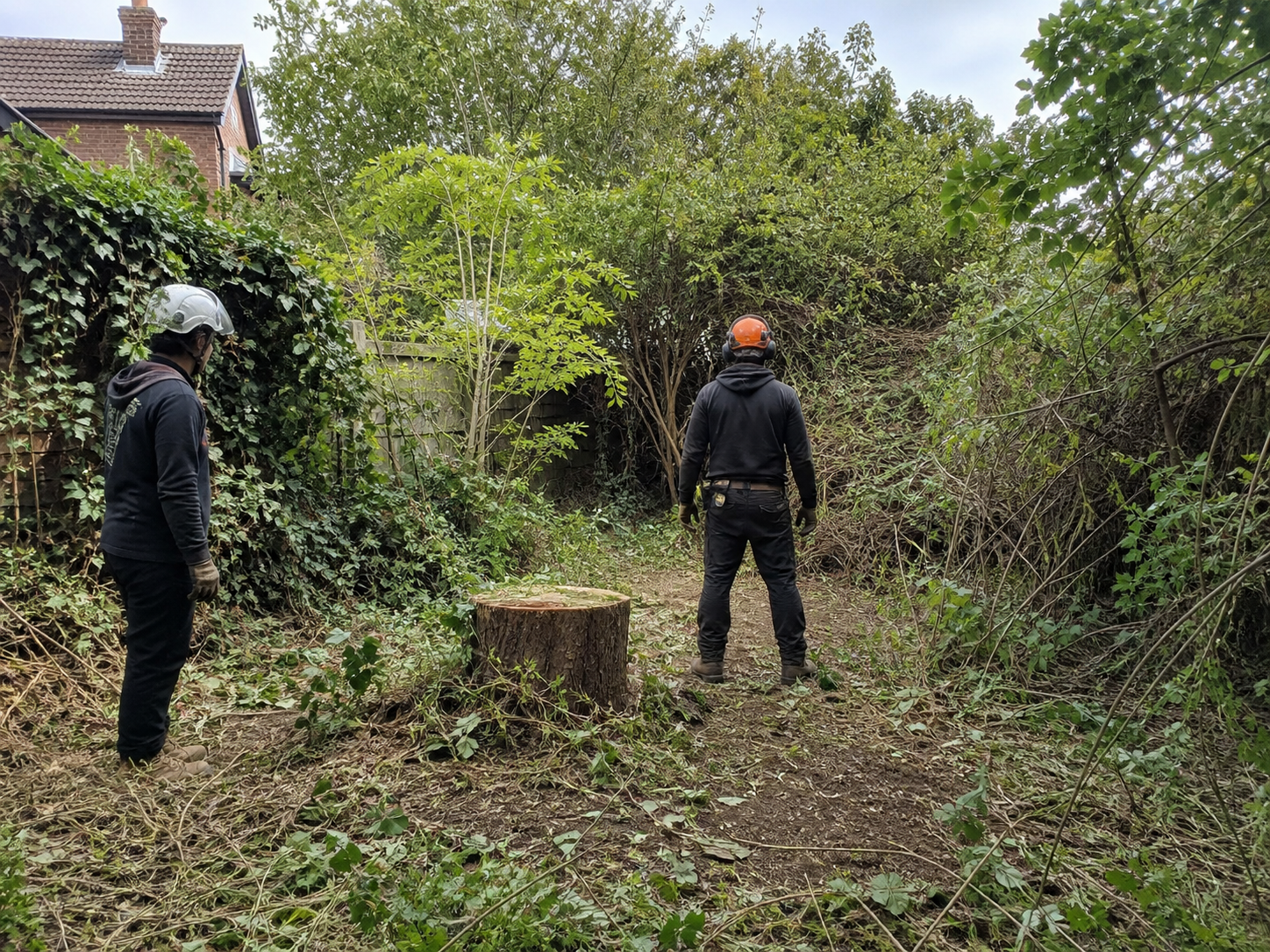
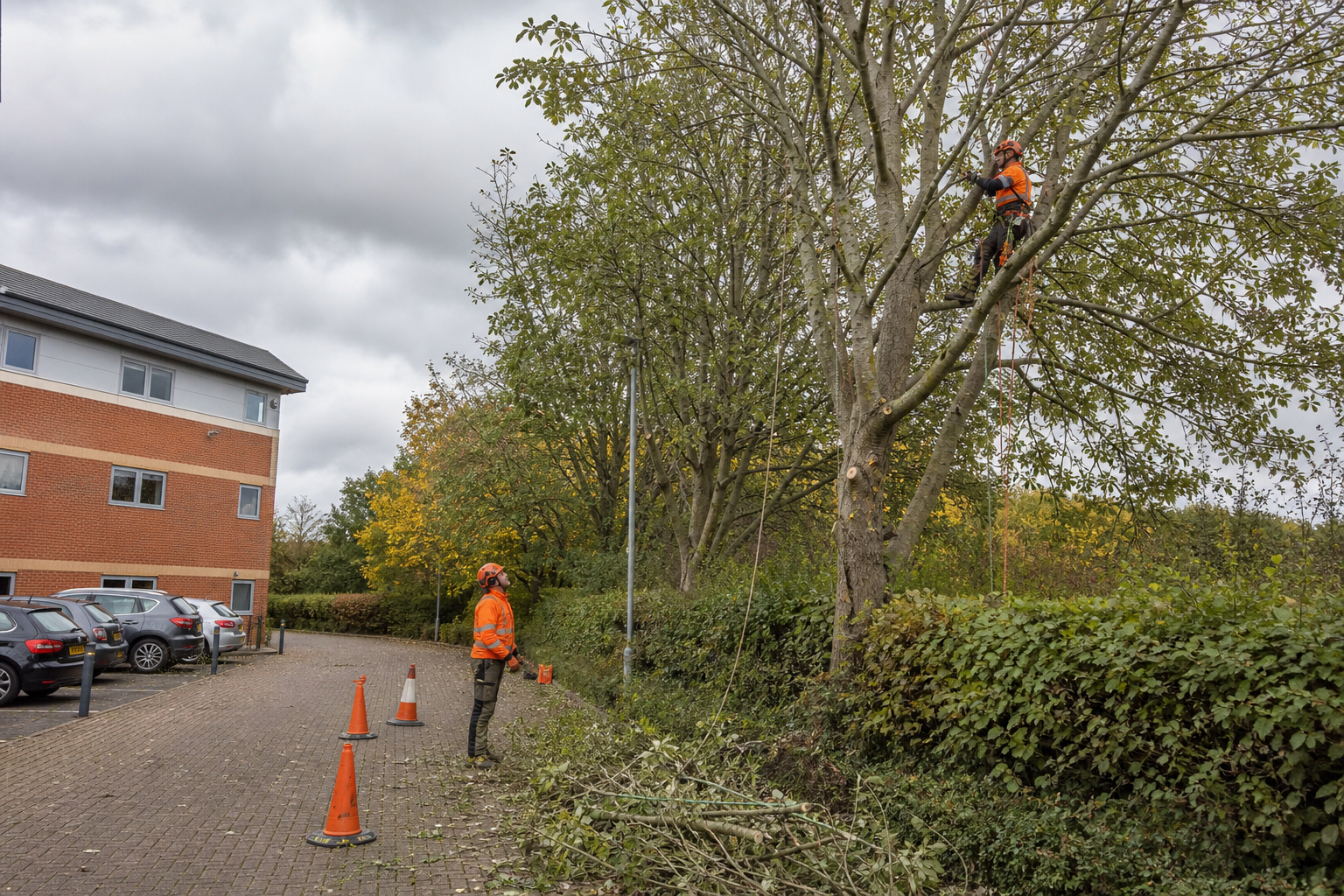
If a tree needs to be removed, the job should still be approached in a controlled, professional way. Depending on the tree and the site, this may involve dismantling it in sections rather than removing it in one go.
We carry out safe, methodical tree removal and pruning services using professional equipment and modern techniques. As a fully insured and NPTC qualified business working to BS3998 standards, we focus on carrying out the work efficiently while protecting the surrounding area as far as reasonably possible.
After removal, some customers also choose stump grinding so the area can be reused more easily for planting, turf, access or general maintenance.
How to make the right decision on your property
If you are unsure whether to retain or remove a tree, use this simple checklist before arranging work:
Consider the main issue. Is it size, light, clearance, condition or safety?
Look at the tree's overall health. A healthy tree with a space issue may suit crown reduction. A declining tree may not.
Think long term. Will the problem be solved by reduction, or will heavy repeat work be needed?
Consider what is nearby. Buildings, access routes and regularly used spaces all affect the level of risk.
Book a professional assessment. The correct recommendation depends on the tree, the site and the realistic management options.
For many property owners, the deciding factor is not whether removal is possible. It is whether retaining the tree still makes practical sense.
Why choose Blackwood Tree Services?
We provide tree surgery for domestic and commercial customers across Leicestershire and Nottinghamshire, including tree removal, pruning, stump grinding, hedge work and garden clearance. Because we are based locally, we understand the types of trees, property layouts and access issues that often affect work across the area.
Customers choose us when they want straightforward advice, safe workmanship and a recommendation based on what the tree actually needs rather than a one-size-fits-all approach. If crown reduction is enough, we will say so. If removal is the safer option, we will explain why.
To find out more about our services or to arrange an assessment, you can book a site visit with Blackwood Tree Services.
Frequently asked questions
Is crown reduction cheaper than tree removal?
Not always. Cost depends on the size of the tree, access, complexity of the work, waste volume and the equipment needed. Crown reduction may be less extensive in some situations, but if repeat maintenance will be needed, removal can sometimes be the more practical long-term option.
Can crown reduction make a dangerous tree safe?
It can improve clearance and reduce weight on parts of the canopy, but it will not solve major decay, root instability or serious structural defects. If the underlying condition of the tree is poor, removal may still be necessary.
Do I need permission to remove or reduce a tree in Leicestershire?
Some trees may be protected or located in conservation areas, so checks may be required before work goes ahead. If you are unsure, it is sensible to confirm the position before any pruning or removal is started.
How do I know if my tree is too large to reduce?
The key question is whether the tree has enough suitable structure and health to respond well to reduction. If reducing it would leave an unbalanced or over-pruned result, removal may be the better option. This is something that needs to be assessed on site.
What happens to the stump after tree removal?
The stump can be left in place at a cut height or dealt with separately through stump grinding if you want the area cleared more fully for future use.
Conclusion
Choosing between crown reduction and full removal is rarely just about the size of the tree. It is about condition, safety, location and whether the tree still has a sensible long-term future in that space.
If you are weighing up tree removal or crown reduction in Leicestershire or Nottinghamshire, the best next step is a professional site visit. We will assess the tree, explain the options clearly and recommend the work that is most appropriate for your property.
Book a site visit with Blackwood Tree Services today to find out whether crown reduction or tree removal is the right solution before the problem gets worse.